Last Updated on June 15, 2021 by Simon Fan
Spring rolls are one of the most iconic dumplings from China.
The origin of spring rolls can be traced to the ancient Chinese tradition of preparing “spring platters” with pancakes and spring vegetables to celebrate the arrival of spring. The tradition gradually evolved over the centuries. Fancier ingredients started to show up on the platters. Rolling up the pancakes with the ingredients became the new form. By the time deep-frying was used to finish the preparation, the spring rolls reached new culinary heights. Not only did they become popular snack food, but they also appeared in upscale banquets. Even the grand Manchu Han Imperial Feast (满汉全席), prepared exclusively for the emperors, listed spring rolls on the menu.
Made with wheat flour, salt, and water, a spring roll wrapper is thin and light, which lends itself to a flaky crust after frying. When it comes to filling, you have lots of room to experiment with your favorite ingredients and express your creativity. My only suggestion to you is to make the filling juicy (but not watery) to create a textural contrast to the crust. If you use meat in the filling, use ground or shredded meat and cook it to the perfect tenderness.
As you would expect, there are many regional varieties of spring rolls in China. In Shanghai, for example, spring rolls filled with shredded pork and napa cabbage and a dessert version with red bean paste filling are the most popular ones. I crave them often!
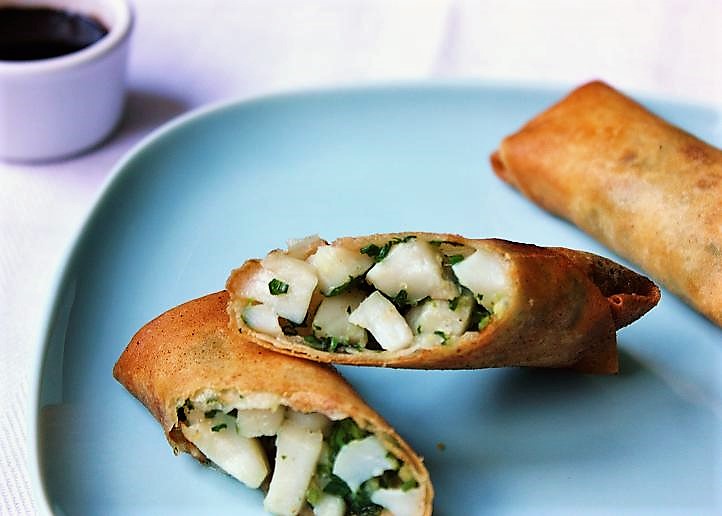
My recipe below will show you how to make elegant spring rolls with scallops and cilantro. Like perfectly seared scallops, these rolls are golden crispy on the outside and juicy tender on the inside. Each bite is a pure delight, filled with refreshing aroma from the cilantro.
Spring rolls with scallops and cilantro
Makes 12 rolls
Ingredients
Filling
1 lb (450 g) scallops (very fresh, of any size)
1 oz (30 g) cilantro, finely chopped
1 scallion, thinly sliced
1 teaspoon grated ginger
1 teaspoon Shaoxing wine
½ teaspoon salt
Freshly ground white pepper
Twelve 6-inch (15 cm) square spring roll wrappers
1 egg white
Dipping sauce
3 teaspoons Worcestershire sauce
1 teaspoon soy sauce
1 teaspoon Zhenjiang (aka Chinkiang) vinegar
Oil with a high smoke point, for deep-frying
Directions
- Cut the scallops into ½-inch (1.3 cm) cubes. In a bowl, mix the scallops with the cilantro, scallion, ginger, wine, salt, and a few grinds of white pepper.
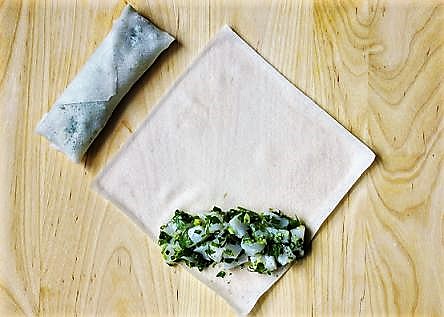
- Place a spring roll wrapper on a work surface diagonally with the bottom corner pointing at you. Spread two tablespoons of the scallop mixture across the wrapper near the bottom corner. Lift that corner up and roll the wrapper over the filling halfway up. Brush the left and right corners of the wrapper with egg white and fold them in. Brush the upper corner with egg white and continue to roll tightly away from you until the upper corner is reached. Press to seal. Repeat with the remaining wrappers and filling.
- To make the dipping sauce, mix the Worcestershire sauce, soy sauce, and vinegar in a bowl.
- Fill a heavy-bottomed saucepan or pot with oil to a depth of 2 inches (5 cm). Heat the oil to 350°F (177°C). Fry the rolls in batches (avoid overcrowding the pan) until the rolls are golden brown, 3 to 4 minutes. Transfer the rolls to a plate lined with paper towels to drain.
- Serve the rolls whole or cut in half diagonally.